The Rastafarian Diet’s Indo-Afro Roots
The ital philosophy, which long precedes mainstream veganism, brings together cannabis as a sacrament with a focus on natural, meat-free eating.
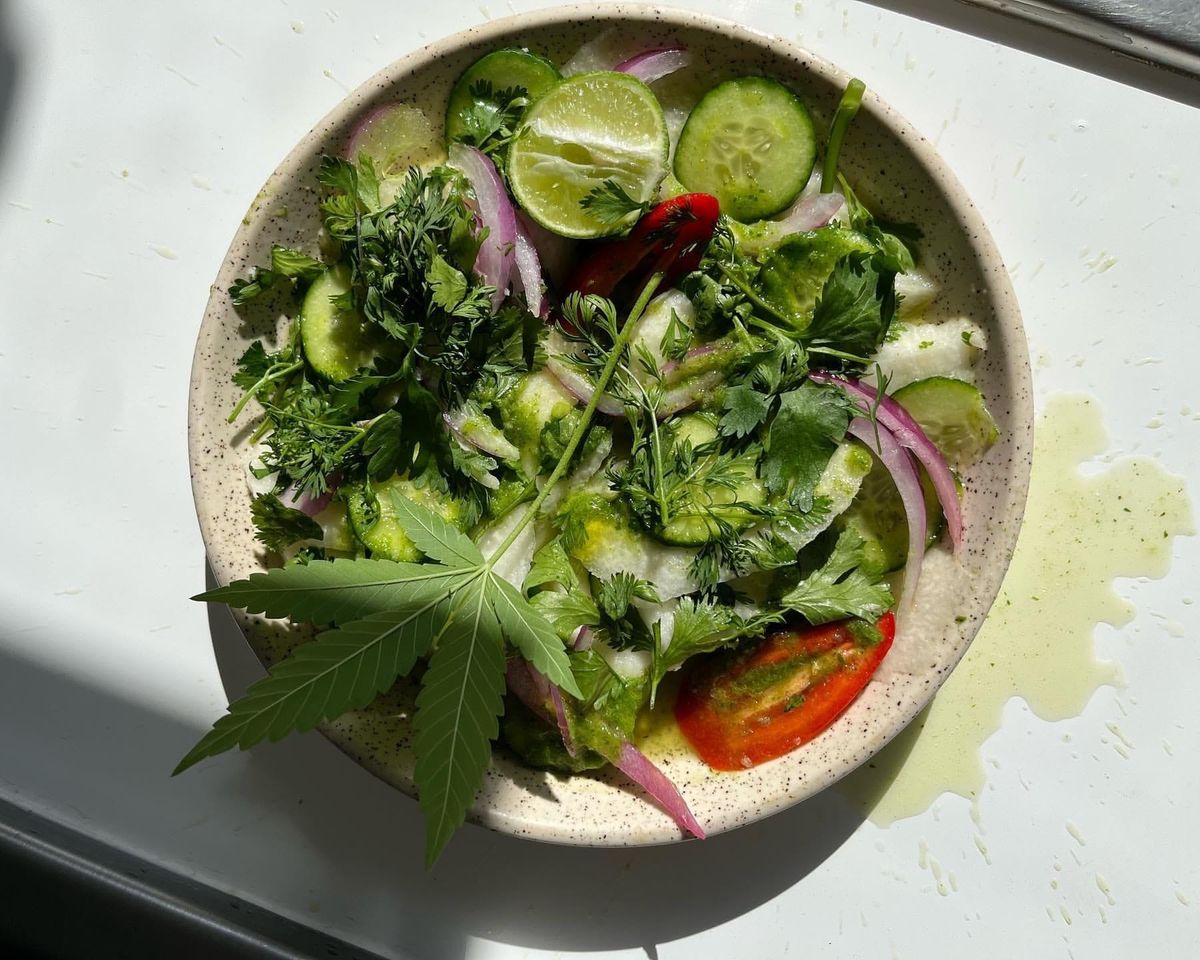
Let’s just say I’ve long been well-acquainted with the central sacrament of the Rastafarian religion — weed. It’s tied to an African diasporic identity formed across many borderlands and oceans. But it wasn’t until I was researching for an episode of Broccoli Magazine’s podcast on weed and the Desi diaspora that I fully understood how much the Rastafarian culinary philosophy is influenced by Indian food traditions.
When the British abolished slavery in 1834, a new, equally vile system of indentured laborers was created. Indian workers were recruited, coerced, and oftentimes disappeared to British Caribbean colonies to work sugar plantations alongside Afro-descendant Jamaicans. Over time, their cultures and cuisines merged. You can smell and taste that exchange across the Caribbean today: Thick, velvety coconut curries layered with turmeric and cumin, slow-cooked chickpea stew, nestled into soft, puffy wraps of roti. Indian influence absorbed into Caribbean foodways, from Guyana and Belize to Trinidad and Tobago.
At the junction of the Indo-Afro diaspora also lies cannabis. When the two sects merged on the island of Jamaica, both already carried ancient and reverent connections to the herb. Long before its arrival in the Caribbean — or even Europe for that matter — it ventured from India to eastern Africa via trade routes, spreading throughout the continent by the 7th century.