It’s a Bad Time to Be Broccoli
Our plants can’t handle the heat.
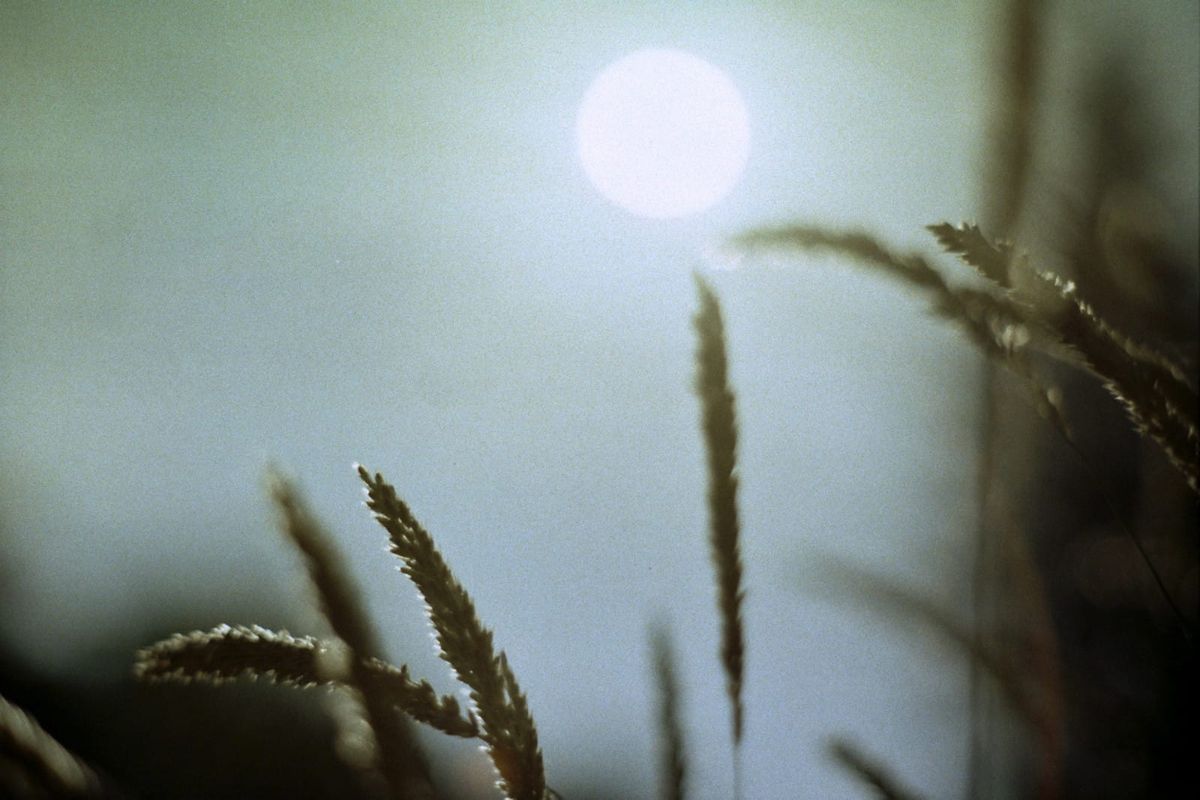
The plants are totally cooked this summer.
In the UK, growers say their broccoli yields have halved, and they’ve needed to scrounge together two spindly heads to make up a normal supermarket bundle. Drought has been so gnarly across Europe that a bridge destroyed after WWII, a Nazi warship, an unexploded British bomb, and woolly mammoth remains have emerged from the Danube’s dregs. In the US, winter wheat harvest predictions are at their lowest level since 1957, and a season of blazing highs has Kentucky growers racing to get vulnerable fruits and vegetables out of the field.
“I think it’s pretty safe to assume these kinds of heat waves aren’t going away or they’re not freak occurrences,” Brooksville vegetable farmer Annie Woods told the Associated Press.
Climate change is behind much of this extreme weather volatility. And it kneecaps our food system in various ways: Higher temperatures evaporate more moisture from plants and the soil, affecting both the quality and quantity of yields. Warmer weather can coax new pests and diseases. Rising sea levels drench agricultural fields with saltwater. And heavy rainfall on bone-dry earth can trigger flash floods that can wipe out entire crops.
I happened to spend all of 2025 becoming increasingly unsettled by this problem, as I researched the remarkable backstories of more than 125 undersung plants to write The Curious Lives of Vegetables. Illustrated by Adriana Picker, the book asks: What do we lose when we lose diversity? And the wild irony I kept ramming my overcaffeinated skull against is that we’ve spent the past century getting really good at making agriculture more standardized. But now we’re asking our crops to survive in a world that’s becoming less standard.

The pursuit of efficiency has had some pretty dire consequences. Something like 50,000 plants are edible, but just three of them — wheat, rice, and maize — account for around 60 percent of global calories. This unfathomable narrowing was a perfect storm: After the World Wars, scientists figured out how to develop high-yielding crops that could outrun famine. Supermarkets wanted uniformity; distributors wanted hardiness; processors wanted predictability. And as seeds became big business, companies increasingly bred and patented varieties they could sell at scale, trapping farmers into a kind of subscription model.
Pretty soon, the market won. If you look at satellite imagery captured above the region spanning Iowa to southern Illinois and eastern Ohio, the heartlands of the US Corn Belt, you’ll see a vast patch of earth shaped like a giant croissant. What was once a shaggy patchwork of tallgrass prairie, wetlands, oak savanna, and woodland — actively tended by Indigenous peoples — is now home to impossibly large fields of identical, high-yielding crops.
Efficiency may have favored sameness, but a dizzying number of incredible weirdos have survived industrialization. That’s where the book’s cast of lovable rogues comes in. I wanted to immerse the reader in the awe-inspiring universe of edible plants rooted far beyond the supermarket shelf.
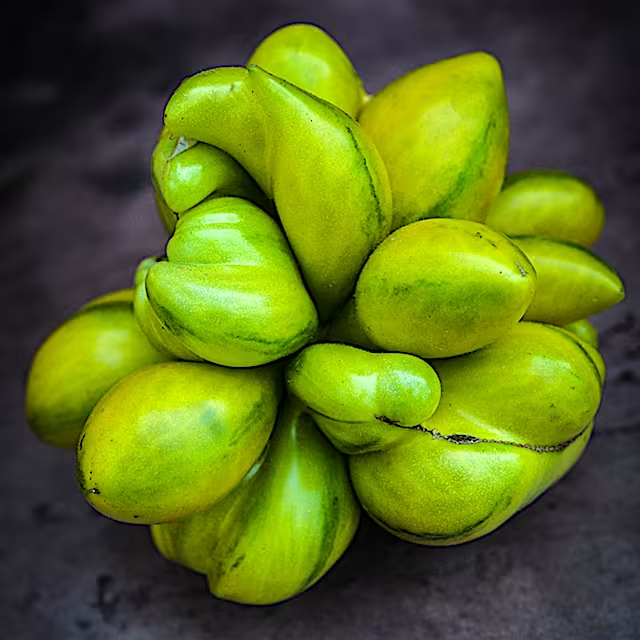
There are more than 10,000 types of tomatoes on Earth, but have you ever met the Paul Robeson? This singular, sweet-smoky fruit was bred in Russia and named for the Black American singer, actor, and activist who became an outspoken admirer of the Soviet Union. Or what about Phil’s Two, a descendant of the Reistomate? The wonky heirloom looks uncannily like Princess Lumpy from Adventure Time. Or the Wild Currant, a tiny, pea-sized bloop with a caper-like zing, that’s spawned so many of today’s varieties?
I didn’t become obsessed with these plants purely because they’re balls-trippingly delicious or breathtakingly beautiful. They also happen to be one of our best insurance policies in an erratic climate. It all comes down to genetics. Some tomatoes naturally thrive in sloshy, wet soils, for example, while others can survive a sun-whalloping on the salt-lashed slopes of Mount Vesuvius. A tart little pop growing wild in the Australian desert might not make for the most luscious summer sandwich, but it could carry the exact heat- or drought-tolerance scientists need to breed into its more flavorful but considerably wimpier cousins.
We’ve learned to feed a growing population impressively well with our monocultures. But, along with decimating the natural environment, putting all of our agricultural eggs in one basket turns out to be just as pernicious as advertised. Just ask the Gros Michel banana. Once the world’s dominant variety, it was virtually wiped out in the mid-20th century by a nasty fungus called Panama disease. Because commercial bananas are propagated as clones, their genetic sameness leaves them particularly vulnerable to pests and pathogens.
The idea that we should hedge our bets, agriculturally speaking, is a no-brainer. You don’t even have to love bananas to see wisdom in biodiversity. One 2019 Nature study that examined 50 years of harvests across 176 crops in 91 countries found that those that grew a greater variety had more stable overall food production. Basically, if your entire field of chickpeas shits the bed, you’ve still got the barley to fall back on.
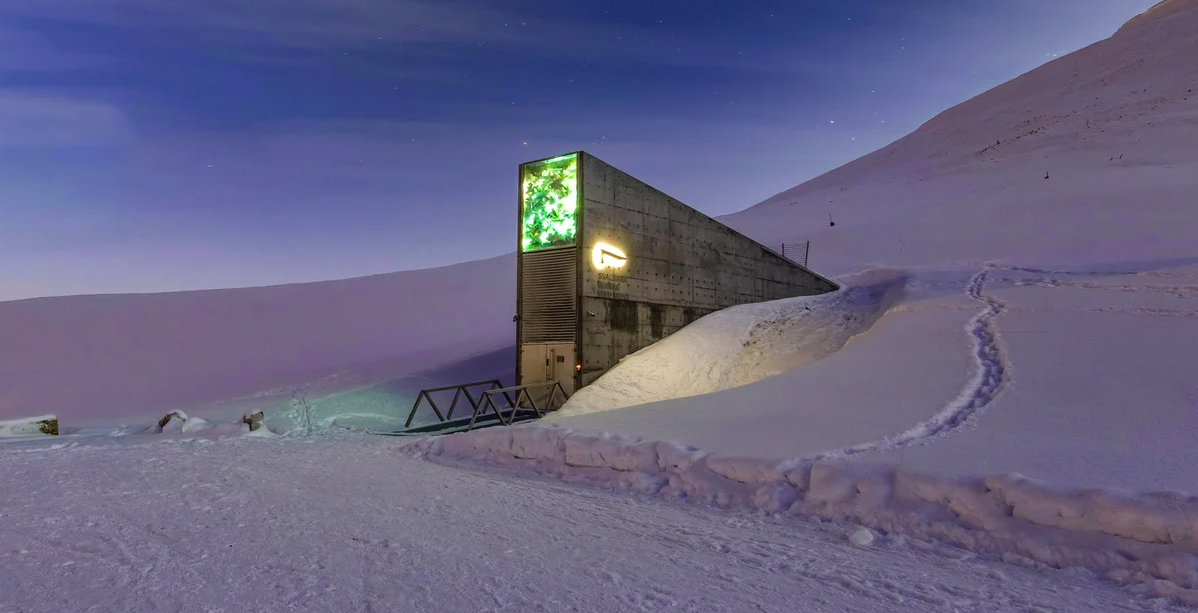
Ultimately, I wrote The Curious Lives of Vegetables to make the case that our edible diversity is worth saving. Along the way, I interviewed Cary Fowler, who was instrumental in developing the Svalbard Global Seed Vault, a frozen backup library of the world’s crops, buried more than 100 meters inside a remote Arctic mountain. He explained that, once a species goes extinct, we can never get it back. “If you want to put the puzzle together, you have to have all the pieces,” Fowler told me. “Even if you don’t know where they go.”
Breeders are drawing on this genetic material to help crops adapt to new pests, diseases, and weather extremes. Farmers and seed savers are seeking out traditional varieties and keeping them alive in the dirt, where they belong. We, too, have a delicious part to play: Shop from farmers. Plant locally adapted varieties. Buy something you’ve never cooked before.
All we really need to do is eat our vegetables.