Who Is Koreatown For?
The fine line between ethnic enclave and cultural consumption.
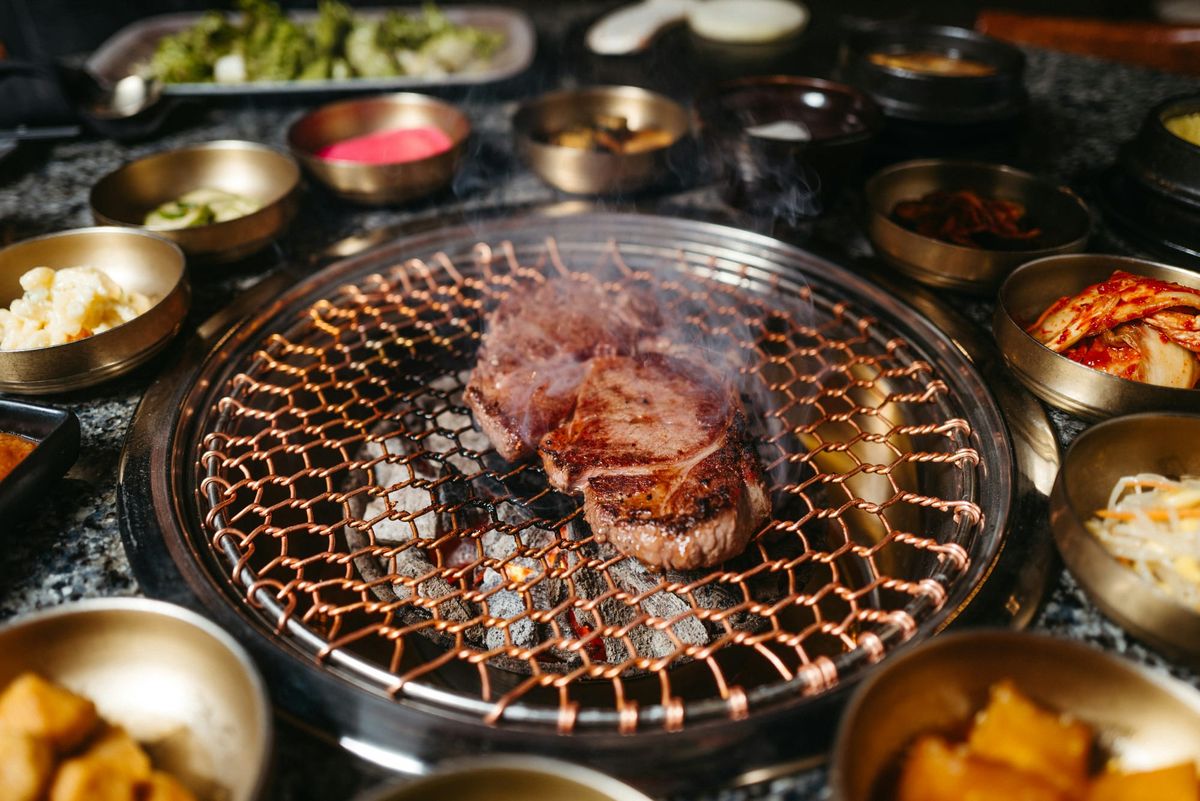
My first visit to Annandale, one of the DC area’s most prominent Koreatowns, was back in 2018, a mere three months after arriving in the United States from Argentina. Riding in the back seat of my cousin’s car, I watched the landscape change from a city filled with monuments to a quiet suburb, and from a suburb into a sequence of strip-mall storefronts illuminated by signs written in Hangul. We arrived at Honeypig Korean BBQ, the sign on its facade flaring in a rather empty, dark strip.
Inside, we sat down at a black marble table with a grill in its center, which our server set aflame immediately. After some deliberation, we settled on the bulgogi, which transformed in minutes from deep crimson to meaty brown the moment it hit the screaming-hot grill. As smoke billowed above, our server returned to snip the slivers of meat with a pair of scissors. She kept the beef and banchan flowing, saying very little and nodding politely now and then.
Seven years later, as a Virginia resident, I returned to Annandale. In daylight, I could see what the dark had hidden on my first visit: thrift stores, supermarkets and bakery outposts, their signs still in Hangul. I understood then what I hadn’t on my first visit — they weren’t advertising to me. The letters were fading, some gone entirely, but the intended audience had never needed them to be bright. I wondered if the inscrutability wasn’t neglect, but exactly the point.